Can Foreigners Buy Property in Saudi Arabia? A Practical Guide for Expats and Foreign Buyers
Yes, foreign buyers can own property in Saudi Arabia, but only under specific rules, approved locations, and eligibility conditions.
For many expats and overseas investors, the real question is not only whether ownership is allowed. The real question is: where is it allowed, which official channel applies to your case, and what should you verify before paying a deposit?
Saudi Arabia’s real estate market is becoming more organized, more digital, and more accessible to non-Saudis. But it remains a regulated market. A modern apartment, attractive price, or promising neighborhood is not enough on its own. The purchase must also match Saudi property law, location eligibility, title deed records, tax requirements, and registration procedures.
This guide explains the key points in simple language for English-speaking expats and foreign investors considering property in Saudi Arabia, especially in cities such as Jeddah, Riyadh, Makkah, and Madinah.
Quick Answer
Foreigners and non-Saudis may own property or acquire real estate rights in Saudi Arabia within approved geographic zones and according to official conditions.
A legally residing non-Saudi individual may also be allowed to own one residential property for personal residence, subject to the official rules and city restrictions.
Makkah and Madinah have special requirements, so any purchase in these cities must be checked carefully before making a commitment.
Property ownership does not automatically grant Saudi residency. It may support eligibility for Real Estate Owner Residency under the Saudi Premium Residency program only if the property and buyer meet the official conditions.
Before moving forward, foreign buyers should verify the location, official application route, title deed, Real Estate Registry status, RETT tax, financing options, and the broker’s FAL license.
What Does Saudi Property Law Allow for Non-Saudis?
Saudi property ownership laws allow non-Saudis to own real estate or acquire certain real estate rights under a regulated framework. The rules consider several factors, including the buyer’s status, property location, purpose of ownership, and type of real estate.
This means foreign property ownership is not a simple “yes everywhere” situation. A buyer must confirm whether the specific property is eligible before treating the deal as safe.
For a normal expat buyer, this may mean checking whether the property can be owned for personal residential use. For a foreign investor, the review may include investment purpose, company structure, geographic zone, and official approvals.
A safer way to think about the process is this:
- The buyer must be eligible.
- The property must be eligible.
- The location must be eligible.
- The ownership or real estate right must be properly documented.
If one of these points is unclear, the buyer should slow down before paying anything.
Where Can Foreigners Buy Property in Saudi Arabia?
Non-Saudi buyers may own property in approved geographic zones determined by the official authorities.
The Real Estate General Authority (REGA) is the key regulatory body for the Saudi real estate sector. REGA’s role includes organizing real estate activities, supporting market transparency, and licensing real estate brokerage practices.
The Saudi Properties Portal is connected to the non-Saudi ownership framework and is designed to help prospective buyers understand designated areas, investment opportunities, and the official ownership journey.
For the buyer, this changes the order of decision-making. Do not start with the unit’s view, finishing, or discount. Start with the location’s eligibility.
A property may look excellent on paper, but if it is outside the approved scope or does not match your case, the transaction may not move forward. That is why location verification should come before negotiation.
Can Expats Buy a Home for Personal Use in KSA?
Some expats may be allowed to own one residential property for personal residence, subject to the official conditions.
This point matters for non-Saudi residents who live and work in the Kingdom and want long-term housing stability. However, it does not mean every resident can buy any property anywhere.
The buyer still needs to confirm the property type, location, registration status, and any city-specific restrictions.
For expats, the best starting question is not “What is the cheapest apartment?” It is:
“Which properties can I legally own, and which ones make sense for my lifestyle and budget?”
That question is less exciting than a discount, but it protects you from a much bigger problem.
How to Apply for Property Ownership Approval Through Absher
For legal residents inside Saudi Arabia, Absher provides an official service called “Request Property Ownership for Non-Saudis.” The service enables non-Saudis residing in the Kingdom to request approval to own property inside Saudi Arabia.
Absher’s service requirements include having a valid residency, providing property information, and attaching a copy of the title deed. The service also states that the resident must not already own another property in the Kingdom.
However, buyers should understand the difference between Absher and the Saudi Properties Portal.
Absher is relevant for resident approval requests.
Saudi Properties is connected to the updated non-Saudi ownership framework, approved geographic zones, and the wider official ownership journey.
Because procedures can change, a buyer should always check the latest official route before applying. Do not rely only on old explanations, social media posts, or verbal advice from a seller.
What About Jeddah Property for Foreign Buyers?
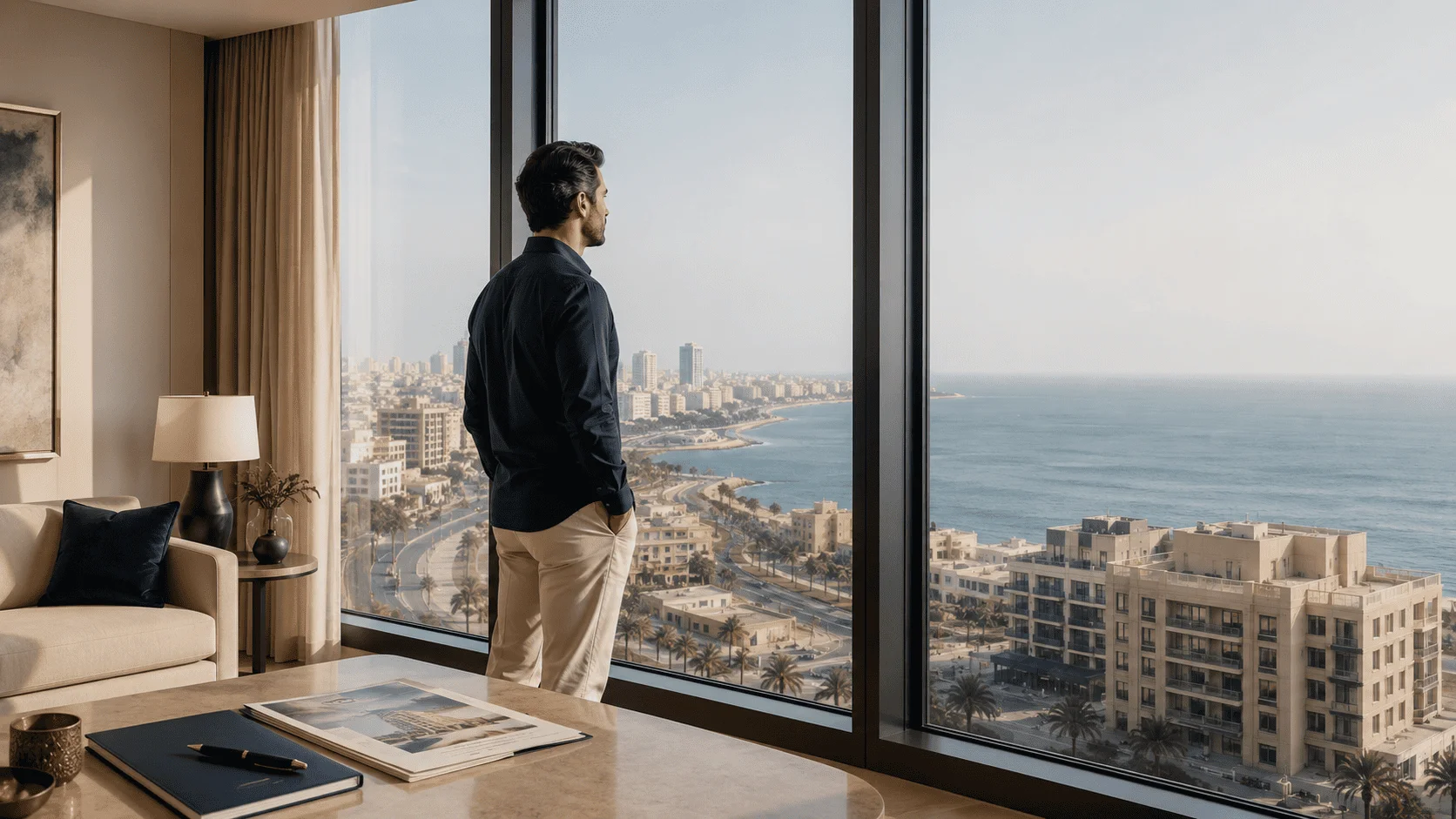
Jeddah is one of the most relevant cities for expats considering ownership. It has strong residential demand, a coastal lifestyle, airport access, established neighborhoods, and a wide range of apartments and family housing options.
Foreign buyers interested in Jeddah property should look beyond the surface. The right unit is not only the one with the cleanest finishing or best photos. It should also pass legal and practical checks.
When comparing Jeddah apartments, review:
- Whether the location is eligible for non-Saudi ownership
- Title deed and registration status
- Building age and maintenance quality
- Parking availability
- Private water tank or utility arrangements
- Owners’ association or service fees
- Access to schools, work areas, services, and main roads
- Resale demand in the same district
When looking at areas such as Al-Hamdaniyah, Al-Marwah, Al-Safa, or nearby residential districts, buyers should compare options carefully and avoid the costly mistakes before buying property in Saudi Arabia that many first-time buyers make.
The goal is not to buy fast. The goal is to buy clearly.
Can Foreigners Buy in Riyadh, Makkah, and Madinah?
Riyadh is part of the regulated ownership framework, and foreign buyers may be able to own property there if the property falls within the approved zones and the buyer meets the required conditions.
Makkah and Madinah are different. These two cities have special rules, and ownership or real estate rights for non-Saudis must be reviewed with extra care.
A buyer should never assume that the same rule applies across all cities. A property in Jeddah, Riyadh, Makkah, or Madinah may fall under different controls depending on location, buyer type, and property purpose.
If the property is in Makkah or Madinah, verify first. Do not pay a deposit based on informal reassurance.
Can Foreign Buyers Purchase Land?
Foreign buyers may be able to acquire certain real estate rights depending on the location, property type, and applicable rules. However, land can be more complex than a ready residential unit.
Land may involve zoning, utilities, building permits, development requirements, and additional legal checks. For an expat buying for personal use, a ready apartment or villa is usually easier to evaluate than raw land.
For investors, land may be attractive, but it requires deeper due diligence. A low price is not always an opportunity. Sometimes it is a warning sign wearing a nice suit.
How to Start Your Property Buying Journey in Saudi Arabia
If you are a foreign buyer, start with a structured process before viewing too many units.
1. Check the official route for your case
If you are a legal resident, review the Absher service for property ownership approval. Also check the Saudi Properties Portal for the latest non-Saudi ownership framework, eligible zones, and procedural guidance.
2. Confirm location eligibility before negotiation
Before discussing price, confirm whether the property is located in an approved area or whether your case falls under a permitted exception.
3. Work only with a licensed broker
Deal with a broker who holds a valid FAL license. A licensed broker should help you compare options, verify basic documents, and understand the transaction steps.
4. Verify the title deed and property records
Title deed verification is essential. The property details should match the seller, unit, size, location, and official records. Where applicable, also check the Real Estate Registry status.
5. Confirm total costs before paying a deposit
Do not calculate your budget based only on the listed price. Include the real estate transaction tax, broker commission, maintenance fees, service charges, valuation costs, and financing-related fees.
6. Check financing early
If you need home finance as an expat, speak with your bank or financing provider before choosing the final unit. The buyer may qualify personally, but the property may still need to meet the bank’s requirements.
7. Compare similar properties
Compare units in the same area by price per square meter, age, floor, parking, finishing, services, and resale potential. A property should win by numbers and logic, not just by emotion.
What Are the Property Buying Costs in Saudi Arabia?
The main official cost to understand is the Real Estate Transaction Tax, commonly known as RETT. It is generally imposed at 5% on real estate transactions in Saudi Arabia.
Foreign buyers should also consider other possible costs, such as broker commission, valuation fees, bank fees, service charges, owners’ association fees, and maintenance costs.
Before signing or paying a deposit, ask:
- What is the RETT amount?
- Is there a broker commission?
- Are there annual service or maintenance fees?
- Are there valuation or financing fees?
- Is the property ready for transfer?
- Are all ownership documents clear?
The real cost of buying property in Saudi Arabia is the full transaction cost, not only the advertised price.
Can Expats Get a Mortgage in Saudi Arabia?
Some expats may be able to access home finance in Saudi Arabia, depending on the bank’s policy, salary, employer, residency status, credit profile, and the property itself.
Financing should not be assumed. A buyer may be eligible, but the property may not meet financing requirements. The opposite can also happen: the property is acceptable, but the buyer’s file needs more work.
For this reason, financing should be checked early. Do not wait until after you choose the unit and pay a deposit.
Saudi Premium Residency via Property Ownership: SAR 4 Million Rule
Property ownership may support eligibility for Real Estate Owner Residency under the Saudi Premium Residency program if official conditions are met.
This does not mean that any property purchase gives the buyer Saudi residency.
Current public criteria commonly refer to qualifying residential real estate valued at SAR 4 million or more, with conditions related to property type, valuation, and financing status. Because residency rules may change, buyers should verify the latest requirements directly through the official Premium Residency platform before relying on this route.
The order matters. If Premium Residency is your goal, confirm the residency requirements first, then evaluate the property. Do not buy first and investigate later.
Common Mistakes Foreign Buyers Should Avoid
Assuming any property is available to non-Saudis
A property must be eligible for your case. Attractive photos do not replace legal verification.
Paying before checking documents
Never pay a deposit before checking the title deed, seller details, location eligibility, and transfer process.
Ignoring city-specific restrictions
Makkah and Madinah require special attention. Do not treat all cities the same.
Confusing ownership with residency
Property ownership and Premium Residency may be connected in specific cases, but they are not the same thing.
Comparing price without comparing value
A lower price can hide poor maintenance, weak resale demand, limited parking, unclear services, or legal uncertainty.
How Dar wa Qarar Can Help
Buying property in Saudi Arabia as a foreigner is not only about finding a unit for sale. It is about seeing the full picture before making a decision.
At Dar wa Qarar, we help buyers compare suitable options, understand practical risks, review key questions, and avoid rushing into a property that looks good but may not fit their needs.
If you are considering property in Jeddah or comparing Saudi real estate options, we can help you narrow down the choices and approach the decision calmly.
No pressure. No exaggerated promises. Just clearer property decisions.
FAQs
Should I pay a deposit before checking the title deed?
No. The title deed, seller details, location eligibility, and transfer process should be checked before paying any deposit.
Can a foreign buyer purchase off-plan property in Saudi Arabia?
It may be possible in certain cases, but the buyer should verify the project, developer, licensing, location eligibility, and official requirements before committing.
Do expats need financing approval before choosing a property?
It is strongly recommended. Financing rules depend on the buyer and the property, so approval should be checked early.
How can I verify whether a broker is licensed?
Ask for the broker’s FAL license details and verify the license through official REGA-related services when available.
Does owning property automatically qualify me for Premium Residency?
No. Property ownership may support eligibility only if the property and buyer meet the official Real Estate Owner Residency conditions.
Conclusion
Foreign buyers can own property in Saudi Arabia, but the smart decision starts with verification.
Check the official route for your case, confirm location eligibility, work with a licensed broker, review the title deed, calculate all costs, and compare similar properties before paying anything.
A good property is not only a beautiful unit. It is a unit that fits your legal position, budget, lifestyle, and long-term plan.
Need help comparing suitable property options in Jeddah? Contact Dar wa Qarar, and we will help you narrow down the choices and make a clearer decision.
Ready to Take the Next Step?
Looking for the Right Property?
Whether you are looking for a property or planning to list yours, contact us and we will guide you step by step.